TriCycle: Proving Temporal Hyperproperties, Coinductively
POPLWe develop a coinductive proof system for temporal hyperproperties, enabling machine-checked proofs about relationships between infinite executions.
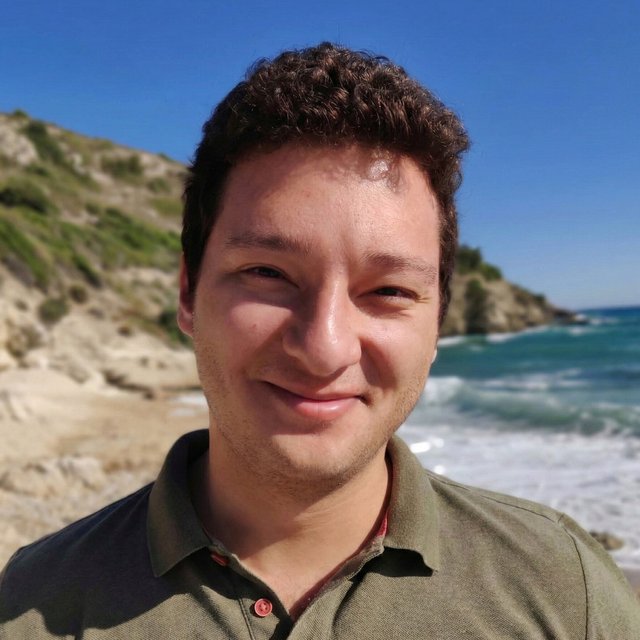
I am a Marie Skłodowska-Curie Postdoctoral Fellow at the CISPA Helmholtz Center for Information Security and a visiting researcher at the Technical University of Munich (TUM), working in the Reactive Systems Group led by Bernd Finkbeiner. Before that, I completed my PhD in 2025 at the Institute of Science and Technology Austria (ISTA) under Tom Henzinger's supervision.
My research aims to help people build dependable computer systems. To this end, I develop theories and algorithms for formally specifying requirements and verifying systems against them.
A central motivation for my work is ensuring that these systems align with societal expectations such as privacy, fairness, and explainability. This is hard because these expectations often require reasoning about how multiple executions of a system relate to one another. Moreover, two systems may both satisfy the same requirements and still differ greatly in quality.
I work toward a unified framework for efficiently measuring how well systems satisfy such relational requirements, known as hyperproperties. In my MSCA Postdoctoral Fellowship project QHyperSTAR, I am laying the foundations for this framework by advancing the theory of quantitative hyperproperties and developing memory-efficient algorithms for monitoring them at runtime.
We develop a coinductive proof system for temporal hyperproperties, enabling machine-checked proofs about relationships between infinite executions.
We introduce the first dedicated specification language for quantitative hyperproperties, which assign values to sets or probability distributions of infinite executions.
We enable our tool Quantitative Automata Kit (QuAK) to automatically analyze performance measures whose values can grow arbitrarily large, such as response times.
We characterize when violations of quantitative requirements can be detected from finite observations by generalizing the safety-liveness classification, and give corresponding algorithms for classifying and decomposing quantitative automata.
We develop a theory of quantitative runtime monitoring that captures the tradeoff between the resources a monitor uses and how accurately it estimates property values from finite observations.
We accelerate the monitoring of distributed systems with bounded clock skew using sound approximations that achieve speedups of up to five orders of magnitude.